Ever wonder if a cloud works like a relay race in your neighborhood? Distributed cloud computing splits work across different computers so everything runs faster and smoother.
Imagine your tasks moving from one computer to another, just like runners passing a baton. With one simple control panel guiding the way, delays shrink and systems work in harmony.
This approach blends speed, smart teamwork, and reliable performance to keep up with today’s tech needs.
Defining Distributed Cloud Computing: Architecture and Core Benefits
Distributed cloud computing lets you spread out public cloud resources over many spots, like provider data centers, third-party facilities, colocation centers, or even your own sites. And the best part? You can manage everything from one simple control panel. In this setup, different parts of your application run on several computers that chat with each other through messages or APIs. Think of it like a relay race where each runner passes the baton perfectly to boost speed and efficiency. Imagine a smart streetlight system that changes its brightness based on traffic, with sensors and lights talking in real time.
By moving computing power closer to where people work and live, this approach cuts down on delays and helps dodge big network hiccups. With one control panel, developers can keep an eye on deployments, set policies, and adjust resources on the fly, kind of like an air traffic controller making sure every flight lands on time. In fact, more than half of global developers and nearly two-thirds in North America are already using some form of distributed cloud, which shows just how sturdy and speedy this system really is. Picture a busy airport where every terminal runs smoothly because the control center coordinates everything perfectly.
Lower latency and fewer network outages are some of the biggest perks of this kind of architecture. When applications need real-time action, like for emergency services or live analytics, they thrive because work happens right where it's needed most, at the edge of the network. Think of it as a network of mini powerhouses working in sync, much like a well-tuned machine that processes every task quickly and keeps everything moving without skipping a beat.
Comparing Distributed Cloud Computing and Centralized Cloud Models

Centralized cloud setups usually run tasks in fixed spots, and that can sometimes cause delays you really notice. Because the data and computing power are often miles away, real-time jobs get slower. And if the main control system has a hiccup, it can throw a wrench into a whole bunch of operations.
On the flip side, distributed cloud computing puts resources right near you. Data doesn’t have to travel far, which makes everything snappy and responsive, perfect for apps that need instant feedback. And thanks to a flexible setup, these models can easily adjust to changing needs, offer smart on-the-fly resource moves, and even cut costs.
Take a look at this side-by-side comparison that highlights how each model tackles key issues:
| Feature | Centralized Cloud | Distributed Cloud |
|---|---|---|
| Latency | Slower responses due to faraway data centers | Quick responses because resources are close |
| Control Plane | One main control that, if it fails, affects many | Local management that keeps risks small |
| Scalability | Limited by how much the central hub can hold | Grows easily with dynamic, on-demand use |
| Fault Tolerance | High chance of trouble if one part fails | Better protection by isolating local issues |
| Deployment Locations | Stuck in fixed regions | Spread out over many sites, including edges and on-premises |
This clear look shows that while centralized systems are simple, distributed clouds bring that extra punch of agility and reliability needed for today’s tech challenges.
Key Technologies Driving Distributed Cloud Computing
Distributed cloud computing is powered by an array of smart tools that team up to boost speed and efficiency. It pulls together resources from public clouds, on-premises systems, colocation centers, and edge sites, making complex IT tasks much simpler. Imagine a group of finely tuned engines, all working together in real time and managed from one spot.
Control Plane Management
Picture one central control panel that guides your apps like an air traffic controller. This tool makes sure that deployments run smoothly, rules are followed, and every part of your system stays visible. For example, think of a smart thermostat that adjusts room temperature based on fresh data from several sensors. That’s exactly how this central monitor keeps things updated and responds to events right away.
Edge and On-Premises Integration
Running tasks close to users feels like setting up a local hub where quick decisions are made without waiting for far-off signals. When workloads are placed at edge sites or on-premises data centers, the system processes data right where it’s created, cutting down delays. Imagine a nearby weather station sending sensor data instantly to a local center for fast alerts. This closeness not only reduces lag but also ensures fast, reliable processing when it really matters.
Unified Orchestration Layer
Think of all your key services, like Kubernetes (a tool that automates app deployment), data pipelines, AI modules, and security tools, coming together under one umbrella. This unified orchestration layer uses the same set of tools to keep settings consistent and operations smooth. For example, you can check out a real-world tech stack here: tech stack examples. With this setup, tasks such as scaling, updating, or troubleshooting become more uniform, accelerating development and making automated decisions a breeze.
Together, these smart technologies build a strong system that not only ramps up computing performance but also makes managing multiple locations easy and flexible.
Real-World Use Cases for Distributed Cloud Computing
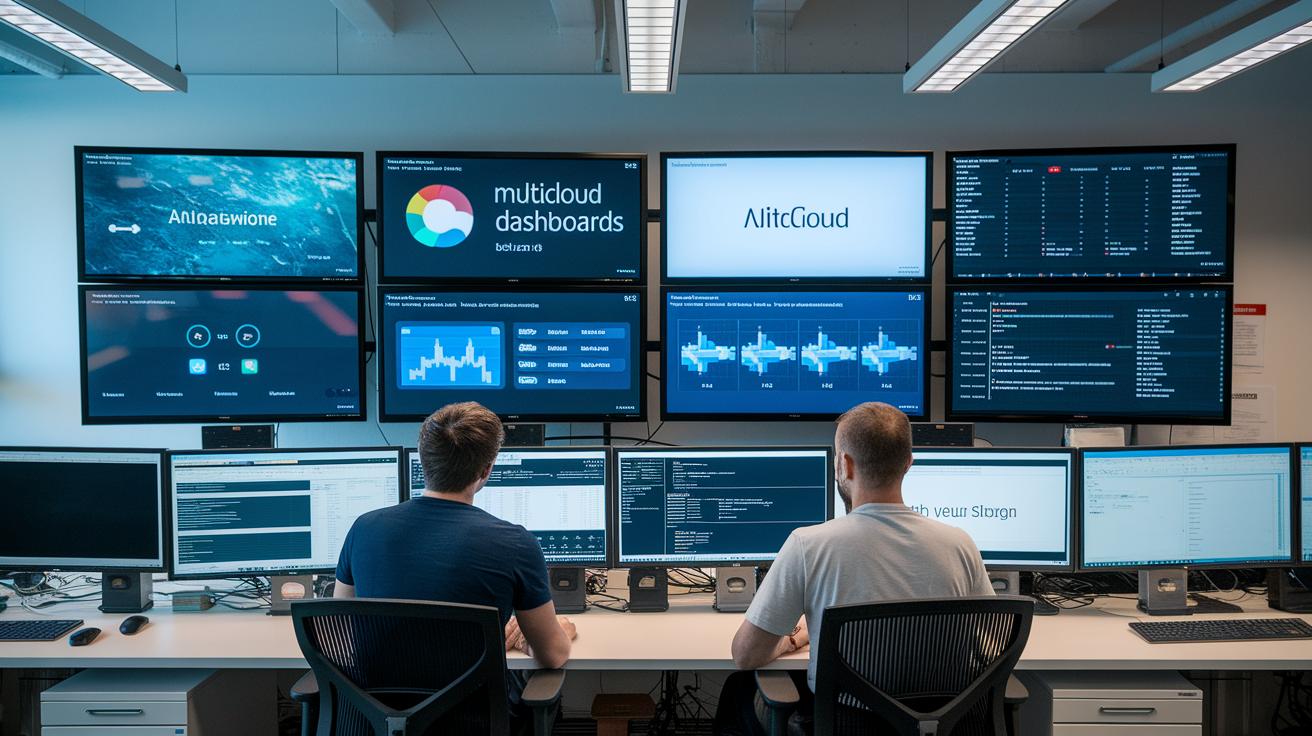
Big companies use distributed cloud computing to easily manage their IT systems everywhere. Picture a business that relies on a smart multicloud platform to control resources at its own sites, colocation centers, and public clouds. This method helps them run operations smoothly in many regions while staying agile and efficient.
In electronic design automation, teams use on-demand compute and storage to keep up with the fast pace of chip designing. Imagine an engineering crew that taps into powerful cloud resources exactly when they need it. This not only cuts down wait times but also speeds up critical workflows. It’s a clear sign of how distributed systems can change the way designers work for the better.
Live and on-demand video streaming get a big boost from this technology, too. Think about a setup much like that used by leading video services, where cost-effective, low-latency platforms let viewers enjoy smooth, real-time streaming. This is a perfect example of geo-redundant computing making multimedia delivery both fast and reliable.
Real-time IoT analytics really shines when data is processed right where it’s created. Picture sensors that instantly send important data to nearby edge sites for quick analysis. This local processing cuts delays and supports strategies that keep multi-region cloud operations efficient throughout the network.
And then there’s a unified control interface that ties everything together. Developers appreciate having one easy view of all distributed resources because it simplifies troubleshooting and scaling. This connected management approach not only speeds up development but also ensures that operations remain secure and responsive.
Common Challenges and Best Practices in Distributed Cloud Deployments
Distributed cloud computing offers great speed and flexibility, but it also brings some tricky hurdles that need careful planning and solid security measures. For example, juggling multiple control plane endpoints can make everyday tasks confusing and lead to mistakes. And when bandwidth is tight, data moves slower, kind of like trying to drive on a bumpy, narrow road. On top of that, rules about data security can change from one area to another, so you must keep updating your strategies. In short, keeping your system strong means mixing smart tech updates with clear, thoughtful policies.
Best ways to tackle these challenges include:
- Using Zero Trust platforms and API security (think of it like a high-tech lock) to guard against weak spots.
- Tweaking your network to ease the pressure from limited bandwidth.
- Streamlining control plane management so operations stay simple and clear.
- Keeping up with changing regulations in different areas to always stay compliant.
- Strengthening content delivery networks and securing edge apps to protect your data both in motion and at rest.
Emerging Trends: Edge Integration and the Future of Distributed Cloud

Edge computing is in the spotlight, with tasks now happening right where the data is made. This smart setup means apps can react in less than a millisecond. Imagine a factory where sensors send live data, letting machines adjust on the fly. It’s like updating rules on the go so that everything keeps working as needs change.
AI is also stepping in to handle everyday decisions, making operations smoother across many locations. Think of a smart thermostat that not only checks the temperature but also figures out the best settings by gathering info from different sources. This shift means AI helps speed things up and keeps systems safe, cutting down on the small tasks people used to do by hand.
There's also a growing push for Zero Trust security models (where nothing is automatically trusted without verification) and serverless distributed platforms. Developers love these ideas, especially as smart gadgets, fast 5G networks, and smart data tools come together. Picture a smart city where every part, from traffic lights to cameras and public services, talks to each other on a secure, distributed cloud, making our urban spaces safer and more efficient.
Final Words
In the action, our discussion showcased how distributed cloud computing changes traditional cloud services. We reviewed how spreading workloads across multiple locations boosts performance, improves security, and streamlines operations. The article broke down the architecture, compared it with centralized models, and presented real-world examples that highlight its strengths. We also touched on handling challenges and looking at future trends, proving that this new approach can simplify complex tasks while being cost-effective. The future feels bright as we continue to innovate and optimize cloud operations.
FAQ
What is the difference between distributed cloud computing and cloud computing?
Distributed cloud computing uses a single control plane to manage resources spread across multiple locations, while traditional cloud computing typically centralizes resources in specific data centers, affecting latency and scalability.
What are some examples of distributed cloud and distributed computing?
Examples include multi-location deployments that mix public, private, and edge nodes; live video streaming with low latency; real-time IoT analytics; and on-demand compute tasks that benefit from location proximity.
What is Distributed Cloud F5?
Distributed Cloud F5 refers to F5’s solution that manages traffic and security across various distributed locations, integrating advanced network controls with a single management interface for consistent performance.
What are distributed computing tools?
Distributed computing tools include software frameworks like Kubernetes, application programming interfaces, and messaging systems that let different nodes work together smoothly across diverse environments.
What are the 4 types of cloud computing?
The four types of cloud computing are public clouds, private clouds, hybrid clouds, and community clouds, each offering distinct environments based on service access and control features.
What is the main difference between a distributed cloud and a centralized cloud?
The main difference lies in deployment: distributed clouds bring resources closer to users for better performance, while centralized clouds host resources in fixed regions, which may lead to higher latency.
Is AWS considered a distributed system?
AWS uses a distributed system design by spanning multiple regions and availability zones, which provides scalability, resilience, and consistency across its global network.
What is a computer cluster in cloud computing?
A computer cluster in cloud computing connects several servers that work together as a single system, boosting processing power and reliability by distributing tasks efficiently across the network.
How do machine learning and artificial intelligence integrate with distributed cloud computing?
Machine learning and artificial intelligence use the uniform control plane of distributed cloud systems to spread data processing across various nodes, thus improving processing speed and decision accuracy.
What role does a computer network play in distributed cloud computing?
A computer network links all distributed nodes, enabling seamless communication and data flow, which is crucial for overall system coordination and efficient resource management.

